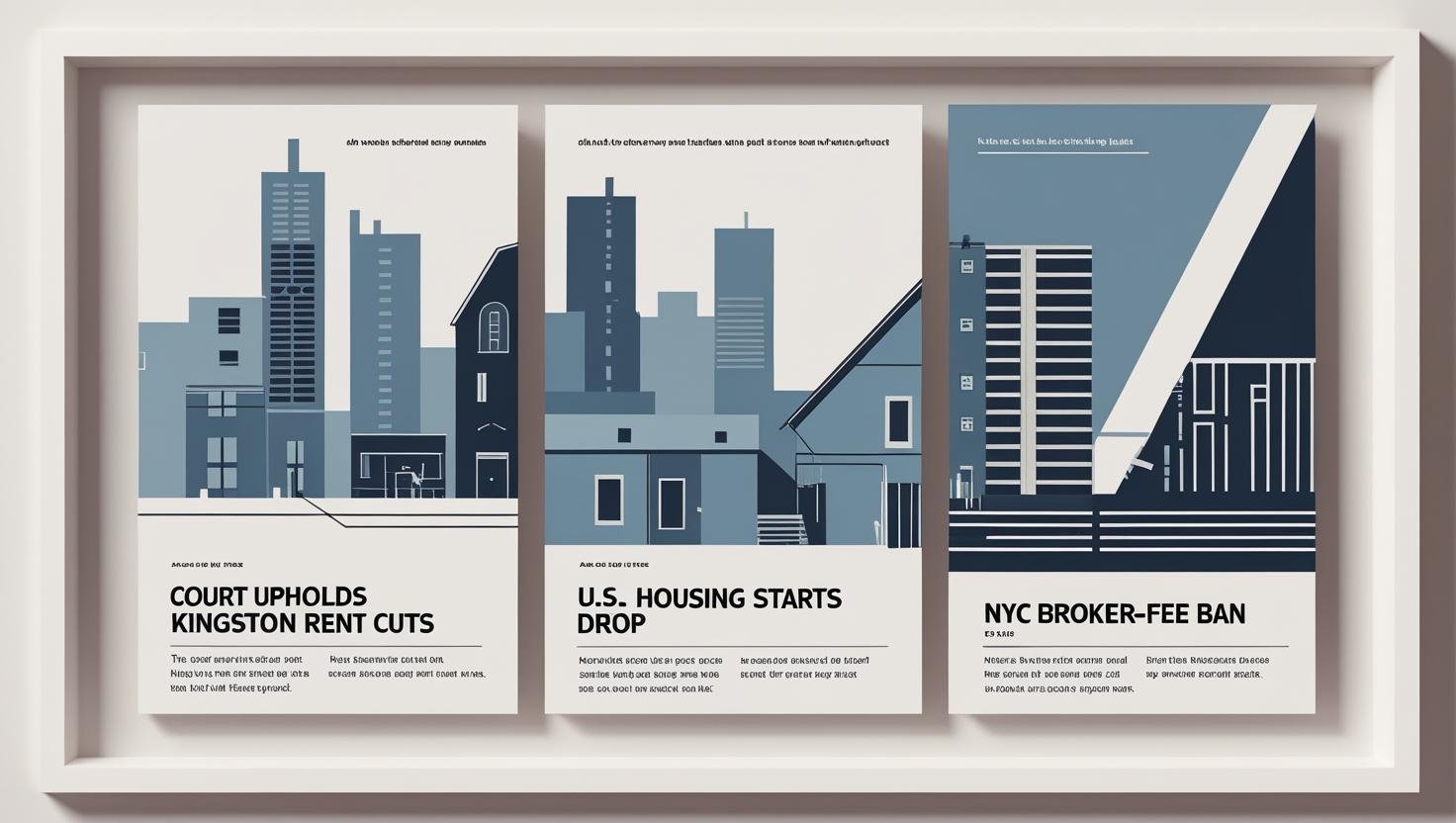
🏛️ Kingston Upholds Rent Reductions
On June 18, 2025, New York’s Court of Appeals affirmed Kingston’s decision to impose a 15% rent cut and extend rent stabilization under the Emergency Tenant Protection Act. The ruling supports broader adoption of rent controls in smaller cities—and tenants may now seek refunds retroactively—marking a major victory for affordability advocates.
U.S. Housing Starts at 5‑Year Low
May data shows housing starts fell 9.8%, the lowest since May 2020, with multifamily units plunging 30.4% and single-family barely steady. Some builders are discounting inventory by 37%, shifting leverage toward buyers and easing price pressures.
NYC’s Broker Fee Ban Rolls Out
The FARE Act, now active in NYC, shifts broker fees from renters to landlords. Renters saved up to 42%—about $7,500 in upfront costs—but landlords are swiftly hiking rents, with some listings increasing nearly $500 overnight. The law targets over 2 million units and is expected to boost renter mobility.
Market Impacts and Implications
- For property managers: Kingston’s ruling signals likely more rent-control efforts in similar markets. Managers should prepare for tighter regulations.
- For buyers: Cooling construction may bring negotiating room now, but strong rental demand suggests continued pressure on multifamily.
- For landlords: NYC landlords must adapt pricing models post–broker fee ban, while builders nationwide are offering deeper incentives
- For renters and buyers: This moment offers potential savings—both in rental move‑in costs and sale prices—but long‑term shifts may ripple through future affordability.
Summary & Call to Action
Kingston’s rent‑reduction ruling, a nationwide construction slowdown, and NYC’s broker‑fee ban are collectively reshaping the property landscape. These changes shift power—toward tenants today, toward buyers where supply loosens, and toward regulators seeking affordability solutions.
Call to Action:
If you’re a property owner, manager, or investor, revisit rent‑pricing strategies, re‑evaluate markets vulnerable to controls, and adjust your rental policies. For renters and buyers, this is your opportunity: explore new listings, negotiate more firmly, and seize potential savings in the shifting market.
About the Author